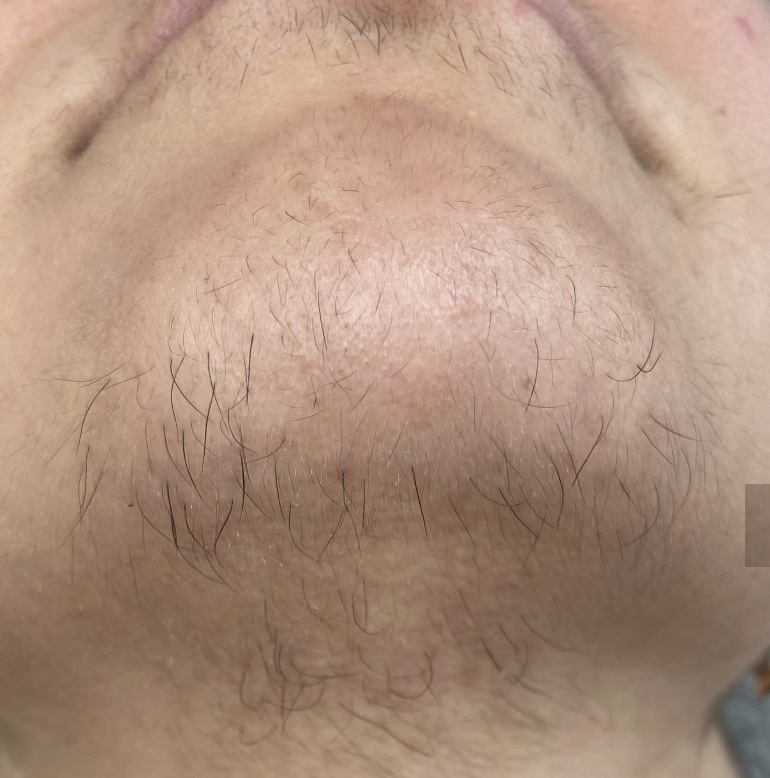
Hormones – the first suspects
Let’s start with the most common culprit: androgens. These are hormones that we usually associate with male characteristics, but they are actually naturally present in women’s bodies as well. Among their many functions is controlling hair growth.
When androgen levels increase or when the body becomes more sensitive to them, facial hair – especially in the chin area – can become darker, thicker, and more visible. This is extremely common, especially at certain times of life.
Periods of hormonal imbalance
Puberty, pregnancy, menopause – these key stages in a woman’s life are often accompanied by serious hormonal fluctuations. It is during these times that hair growth can appear in unexpected places, including the chin.
During menopause, for example, estrogen levels drop, which “makes room” for androgens. This can lead to coarser and darker facial hair. Although slightly disappointing, this change is part of the body’s natural processes and should be accepted with understanding and calmness.
Genetics – a factor we cannot choose
If your mother or grandmother had chin hair, there’s a good chance you’ll have it too. Genetics play a huge role in how dense your hair follicles are and where they’re located.
Like eye color or hair texture, it is part of our biological inheritance that we receive without being able to control it.
Hair Growth Cycles – The Invisible Process
A lesser-known fact is that facial hair goes through the same three main growth phases as the rest of the body hair:
Anagen – active growth phase
